What is self-drilling screw stainless? The full guide to the ABEI model.
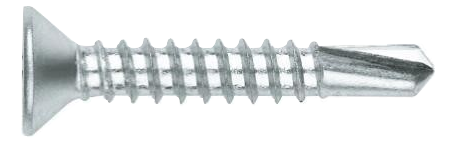
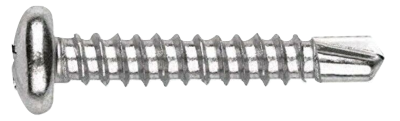
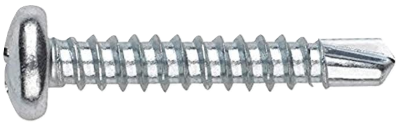
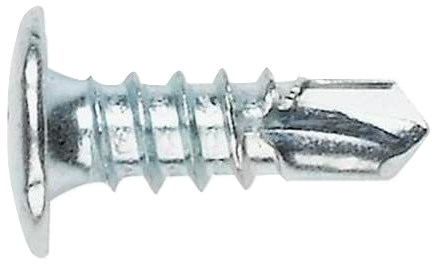
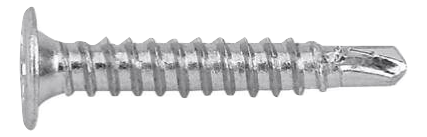
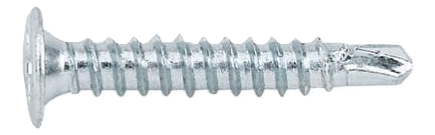
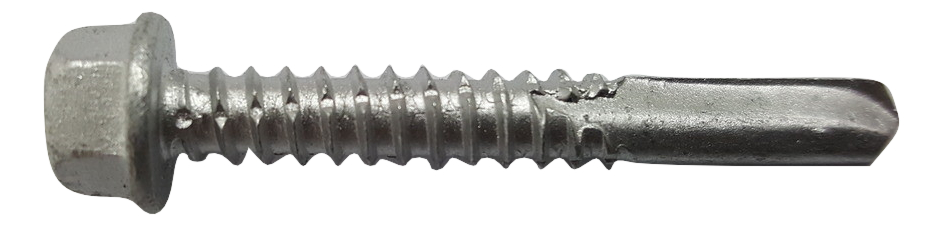
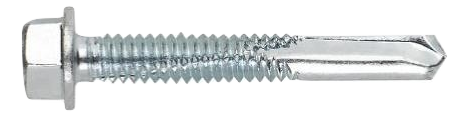
self-drilling screw stainless sample ABEI It is a self-driving screw (Self-Drilling Screw) fully produced from 304 (304SS), also known as A2), and specifically intended for aluminum profiles. At the end of the screw, a sharp drilling knife is swallowed, allowing it to suffocate the aluminum and penetrate it in one continuous operation – without the need for a pre-hole.
Unlike the screw-tapping, it requires the preparation of an early hole. self-drilling screw stainlessia ABEI Saves a whole phase of installation and other work tools on the ground. Unlike a normal self-drilling screw, the entire screw body is made of stainless steel throughout each cut – so there is no external coating that can be peeled or played over the years, but a psycheduling layer that further strengthens the resistance estroastia.
When is the self-drilling screw stainless used for aluminum? Burgbourg ABEI It is suitable for aluminum connections in a profile of up to 6.5 mm, and is distributed in applications such as: aluminum cladding and compacts, window frames and aluminum doors, beds and trading buildings, aluminum rails and skulls, and projects in coastal areas and industrial environments requiring QZ002 in a higher corrosion than that of the QZ000 standard KZolo.
Advantages of self-drilling screw stainlessa ABEI - not all screw stainless is the same.
- Quality stain 304 (A2) with psycheduling: resistance is significantlycorrosion compared to the steel glories, suitable for outdoor environments, coastline and chemical industrial environments.
- Technical data is happy to connect aluminum: Values of the Nrk/Nrd and the gira (Vrk/Vrd), and also recommended load for ongoing service (Nrec/Vrec), for each diameter and thickness of aluminium profile.
- The direct fastening technology: The ABEI-coded screw and killed the aluminum in one operation, without the need for early fever or other accessories.
- A variety of locomotives and guests: Four locomotives (ST4.2 to ST6.3) and a variety of lights, depending on the thickness of the connected aluminum profile.
- strength does not fall from Hamburg steel: self-drilling screw stainlessya must not be a “proper” on strength in exchange for resistance in the Corsusia – a full-time detail saw the questions and answers below the page.
Technical data is happy - linking self-drilling screw stainless steel to aluminum profile
The following data constitutes the basis for safe structural planning of connections. self-drilling screw stainless for aluminium profile. All the values in tables are in KN to a single screw. Note: Nrk/Vrk are typical load load load load load loads measured in the lab; Nrd/Vrd are the safe prepared load load loaders after operating safety promotion; and Nrec/Vrec are the recommended serviceloads for ongoing use. In addition, the planner should also make sure that you will tolerate the aluminum profile itself for a tear.
ST 4.8 – self-drilling screw stainless to connect aluminum profile
| Load parameter (kN) | aluminum thickness 2 mm | aluminum thickness 3 mm | aluminum thickness 4 mm |
|---|
| Failure load – tension (Nrk) | 2.9 | 4.6 | 6.4 |
| Failure load – shear (Vrk) | 3.6 | 3.6 | 3.6 |
| Design load – tension (Nrd) | 1.3 | 2.1 | 2.9 |
| Design load – shear (Vrd) | 2.7 | 2.7 | 2.7 |
| Recommended load - fun (Nrec) | 1.0 | 1.5 | 2.1 |
| Service load - a ring (Vrec) | 2.0 | 2.0 | 2.0 |
ST 5.5 – self-drilling screw stainless to connect aluminium profile
| Load parameter (kN) | aluminum thickness 2 mm | aluminum thickness 4 mm | aluminum thickness 5 mm |
|---|
| Failure load – tension (Nrk) | 2.0 | 7.6 | 9.6 |
| Failure load – shear (Vrk) | 4.8 | 4.8 | 4.8 |
| Design load – tension (Nrd) | 0.9 | 3.5 | 4.8 |
| Design load – shear (Vrd) | 3.7 | 3.7 | 3.7 |
| Recommended load - fun (Nrec) | 0.7 | 2.5 | 3.4 |
| Service load - a ring (Vrec) | 2.6 | 2.6 | 2.6 |
ST 6.3 – self-drilling screw stainless to connect aluminium profile (the largest diameter in the series)
| Load parameter (kN) | aluminum thickness 2 mm | aluminum thickness 4 mm | aluminum thickness 6 mm |
|---|
| Failure load – tension (Nrk) | 2.3 | 7.4 | 13.4 |
| Failure load – shear (Vrk) | 6.9 | 6.9 | 6.9 |
| Design load – tension (Nrd) | 1.1 | 3.5 | 6.3 |
| Design load – shear (Vrd) | 5.3 | 5.3 | 5.3 |
| Recommended load - fun (Nrec) | 0.8 | 2.5 | 4.5 |
| Service load - a ring (Vrec) | 3.8 | 3.8 | 3.8 |
Note: The inflamation in the giraffe does not occur in the aria of the profile (aluminium). The plan must be checked to examine the profile’s suffering for the final rapportation in the ring.
The Geometry and the measurements: self-drilling screw stainlessa ABEI
Series series self-drilling screw stainless Adit ABEI offers a dimensions that match each aluminum profile thickness and drilling requirements:
| The screw | Foreign diameter including the D (M) | The screw d heart diameter (m) | Head of Dk (M) | The thickness of the head of K (M) | The length of lengths (m) | Recommended drilling range (M) |
|---|
| ST 4.2 | 4.22 | 3.10 | 8.5 | 4.1 | 13 - 19 | 1.75 - 3.00 |
| ST 4.8 | 4.80 | 3.58 | 10.0 | 4.3 | 13 - 32 | 1.75 - 4.40 |
| ST 5.5 | 5.46 | 4.17 | 10.5 | 4.3 | 19 - 25 | 1.75 - 5.25 |
| ST 6.3 | 6.25 | 4.88 | 12.6 | 6.3 | 19 - 25 | 2.50 - 6.00 |
The maximum aluminum profile according to the length of the screw
| The length of the screw (m) | ST 4.2 | ST 4.8 | ST 5.5 | ST 6.3 |
|---|
| 13 | 4.3 | 3.7 | - | - |
| 16 | 7.3 | 5.5 | - | - |
| 19 | 10.3 | 8.7 | 8.7 | 7 |
| 22 | - | - | 11.7 | - |
| 25 | - | 14.7 | 14.7 | 13 |
| 32 | - | 21.5 | - | - |
installation guide Fast – self-drilling screw stainless steel for aluminum
- Mark the drilling point: A slight plaque with a precision marque will prevent the circulating knife of the stainless burger at the beginning of the rotation over the aluminum.
- Prepare the right screw: The recommended drilling speed for self-drilling screw stainlessa ABEI is 600-1000 rpm for ST4.2, ST5.5, and ST6.3, and 1000-1500 rpm for ST4.8. High speed from the recommended may “burn” the drilling wing and prevent the penetration of aluminum.
- The screw in the profile: Hold the screw in 90 degrees to the material and uniform pressure. The quarant rang up causes the breaking of the drill knife and a weak and damaged connection.
- Stop with the screw: When the head of the screw is attached to aluminum and comes to the necessary tighterwood - stop. The excess artery may dissolve the coating or damage the resulting in aluminum.
All screws are coded in Norse and steel in the Adit catalog.
- ABEI: self-drilling screw stainless steel 304 (A2), a quaint head with a return, is designed to connect aluminum profiles with a thickness of up to 6.5 mm.
- ABE: steel classic from Galluon, without stainless steel, is suitable for steel and aluminum in protected internal environments, which are lower than ABEI.
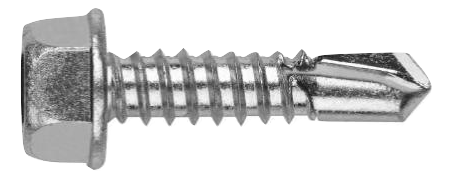
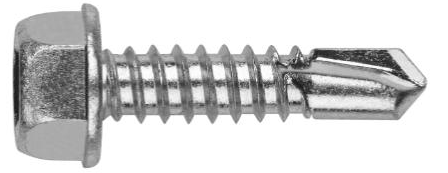
- BIE / BIE A4: self-drilling screw B-Telali - a stainless body (304 or 316) with a swipe from a quainted steel. Unlike ABEI, it is designed to directly drill the steel and Nerosta profiles.
- AUTO / BAUTO: self-drilling screw with a particularly long knife for heavy steel profiles, up to 12 mm thick. TheBAUTO It is the only version of the Rost.
- ABRA2 / ABPCA2 / BCPA2: Additional head models (inspionage, absorbed, and more) in the body of stain A2 - aesthetic connections requiring resistance in corrosion.
- RS A2: self-drilling screw stainless steel with a small lens head, delicate stitches and aluminium-minute frame.
Engineering consulting + self-drilling screw flora is quality = a safe aluminum connection over the years
The market is flooded with cheap stainless stainless steel bars from overland sources, sometimes made from stainless steel alloy strength or with only partial psycheduling. What distinguishes you. Adit Ltd Other suppliers are the full engineering knowledge and documentation. The company engineers are available to assist in calculating and selecting the screw diameter, the length of the screw and the appropriate errosta (304 or 316) in accordance with the work environment and the thickness of the aluminum profile, which blocks costs of objects on the ground and enables standard and happy concrete design. Each engineering question can be addressed to the engineer of Adit on the phone at the Mandel-7976110.
Common Questions and Answers (FAQ) – self-drilling screw stainless
What is the difference between self-drilling screw stainless (Self-Drilling) and the Gara-Self-Tapping?
self-drilling screw stainless Like ABEI, a combined drilling knife is at its end, allowing it to drill the hole that leads itself into aluminium profile – without the need for an external drill bit. On his side, screw in the Self-Greves of Neasta (Self-Tapping) cuts the umbilical grove but requires preparing an early drilling hole in the right line before the screw. Using self-drilling screw stainlessta saves a complete stage in installation and working tools on the ground.
How do you choose the irroastolic code diameter suitable for aluminium profile?
The choice depends on the thickness of the aluminum profile that plan to connect: ST4.2 is suitable for the thickness of up to 3 mm, ST4.8 to the thickness of up to 4.4 mm, ST5.5 to the thickness of up to 5.25 mm, and ST6.3 - the largest diameter in the series. self-drilling screw stainless ABEI - suitable for the thickness of up to 6 mm. It is recommended to also refer to the Nrd/Vrd load required in project, and not only to the profile thickness.
Is self-drilling screw stainless (ABEI) also suitable for a steel or a stainless profile?
No. self-drilling screw stainless ABEI Designed and happy to connect profiles. aluminum Only – is it not suitable for a steel profile drilling, nor a snoring profile drilling. ABEI’s drilling wing may have a relatively soft stain (as compared to steel is blocked), so an attempt to drill in it steel or stainless steel can cause a rapid erosion of the wing, its capital, or a failure in installation without the screwing into the material. For links requiring direct drilling in steel or stainless, use a pixel-like self-drilling screw as a metali as BIE or BAUTOIn which the screw body is made of stainless steel, but the drilling wing may be steel from a condition suitable for penetrate these difficult materials.
Is self-drilling screw stainless always weaker than steel?
It is not true to put this in a sweeping manner. Nerosta is a broad family of alloys in different strength ranks – there is a osteoartite stain (such as 304/A2 or 316/A4) that resembles strength of regular screw steel, and there are also narcissitical stains and alloys from strength and Z (such as 410 or 17PH) that come to even higher than standard. For example, the screw stainless steel in the ST6.3 diameter (no depending on the specific aluminum connection) strength, an internal tension of about 13.4 kilostone and strength gemstone of about 6.7 kiloton – similar to the self-drilling screws parallel in the same diameter. The conclusion: When choosing a screw, the specific load data in the table (Nrk, Vrk, Nrd) of the selected model and the quartet should be compared to the automatic “Narrote = a weaker screw.”
What is the difference between stainless steel and A2) and the Nerosta 316 (A4), and when to choose each?
A2, like the one from which it is made ABEIThe resistance offers very good corrosion for most burns – besides, humidity and light chemical cleansing. Nirsta 316 (A4) contains a mellivan supplement and offers even higher resistance in very aggressive environments – direct proximity to the sea, seawater, veins and a tough chemical industry. For project a standard aluminum, A2 is usually sufficient; the projects in the first coastline or in a difficult chemical environment, it is recommended to consider A4-grade models.
What is EPDM and why is it important for self-drilling screw stainlessia?
When the self-drilling screw fragments into aluminium panel, roof or exterior wall, the screw creates a metal hole that can set rain and water into a structure. Specialized Models (such as PSL(c) arrive with a scuba diving (disc) containing an EPDM seal – a particularly resistant rubber type for UV rays and the sun. With the right estrangement, rubber is pressed and creates a dramatic seal from the penetration of water around the hole.
What is the difference between Nrk and Nrd (Nrd (Nredible) and Nrec?
Typical failure load (Nrk) is the screw or aluminum profile courses or derivatives in destructive laboratory tests - this is the figure shown in top tables (Failure Load). Do not plan project by the failure load! Engineers divide the failure load in “safety” (by international standards) to reach the Nrd (safe risk). Nrec is a recommended service load for ongoing use, which provides another security layer beyond the Nrd. Adit provides engineers with all three data to perform the appropriate calculation.
Can we break self-drilling screw stainless and re-engine it in the same hole in aluminum?
It is entirely possible to break down the screw and release the connection, but Really not recommended The barbar returned the same hole to the same hole. The acohering in aluminum is easily glittered in a guy’s fabric, and the repeated screw can significantly damage the diaspora (following “excellent” in the profile). In such cases it is best to move to a larger screw diameter or place the new screw at a slight distance from the old hole.
Why is the drilling wing of self-drilling screw stained or unable to drill aluminum?
In most cases this occurs due to incorrect installation: the exclusion at an curve (not 90 degrees), speed from a high or too low screw (you must work according to the manufacturer’s RPM table), attempt to drill a thickness of aluminium profile that is greater than the permitted for the selected screw measurement, or attempt to drill through AI harsh material from aluminum (such as QZ000 or stainless) to the appropriate model of the type.





![[your-subject]](https://www.adit.org.il/wp-content/uploads/2026/06/BIE-A4.png#9970)