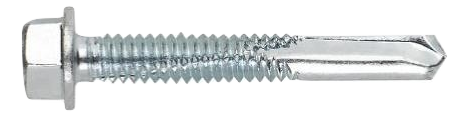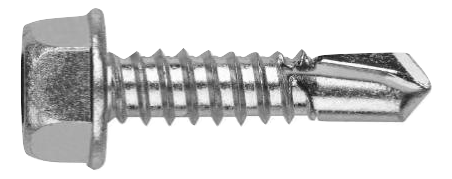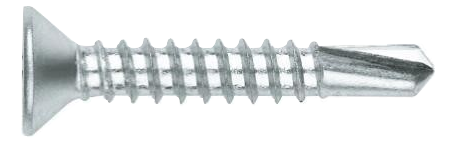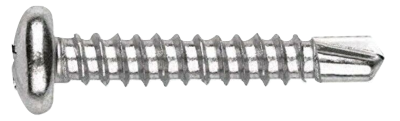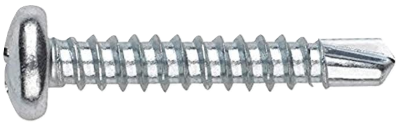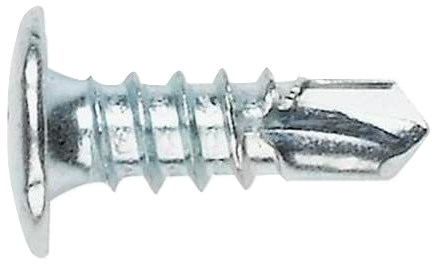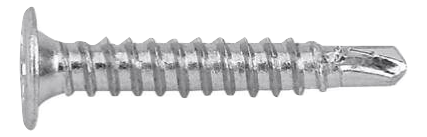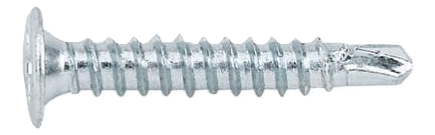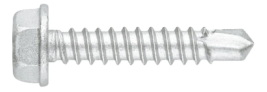

self-drilling screw in Me-Tel

BIE / BIE A4

self-drilling screw B-Tel is called stainless steel A2/A4
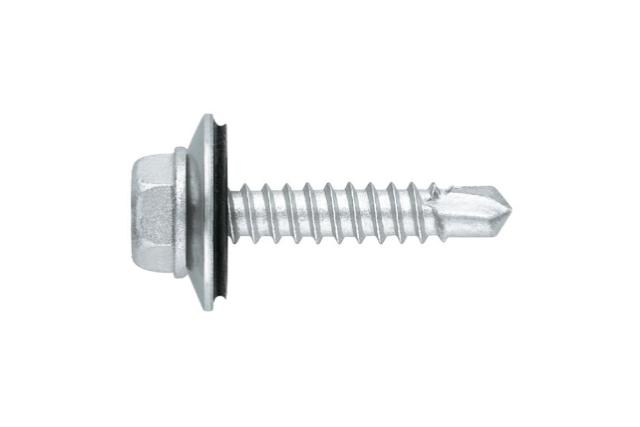
Technical Specification

  • Characteristics self-drilling screw-Metel is coded for steel (up to 6 m)
  • Material Head of + Part with the Barga: SS304
                The hot-dipped galvanized SAE J403 1022  
  • Protecting the Corsusia : Silver Ruspert Coating
  • Head by Box M8
  • Installation tool High-speed screwdriver (1000–1800 rpm)
  • The option Filed to: EPDM ARVUL

Instruction videos self-drilling screw BIE


installation guide self-drilling screw stainless

A variety of codified screws from Adit Ltd
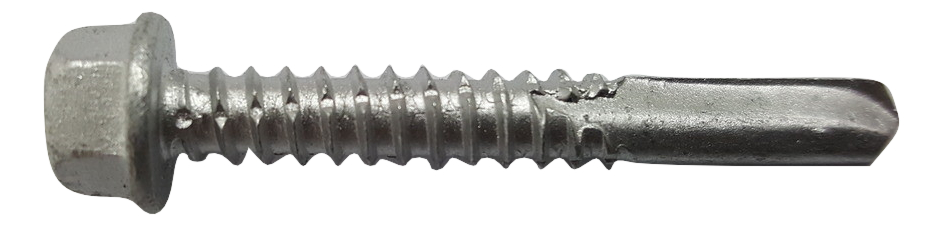
self-drilling screw Bie-Metel stainlessia ADIT BIE - Full technical article

self-drilling screw Bie-Metel stainlessia ADIT BIE - Full technical guide

self-drilling screw in Me-Tel Order of Order ADIT BIE It is a solution to engineering connection. Combining two metals in one screw: body and burger may AISI 304 (SS304) from resistance Most before the corrosion, and a knife of drilling may be Carbon steel from C1035 We have caused difficulty. High for direct drilling. self-drilling screw in this methel allows the snoring, drilling and screwing in one continuous operation – Without any need for a pre-president. - In the tin and steel profiles with a thickness of up to 6.5 mm.

The screw is provided with The Atlantis C3-H On the drill knife, protecting the tip from the touch with moisture as well. In aggressive conditions. The Hike standard is ISO 10666 The same is the mechanical data of screws classic self. The series is also available in the version. BIE A4 with a body AISI 316 For particularly aggressive and maritime environments.

Advantages of self-drilling screw Bieel and Nirvana ADIT BIE

  • Direct drilling without preparation: The self-drilling screw, Macberg and Madd at one stage, does not need a separate drill bit and a pre-president.
  • True beta-metall technology: The SS304/SS316 stainless steel body (steel) is C1035 – a combination that provides full corrosion protection with high-cutting difficulties.
  • The Atlantis C3-H: Proven protection for the drilling knife in aggressive environments: sea, chemical industry and foreign conditions.
  • ISO 10666: This mechanical data is identical to self-driving habits, which enables standard-based structural planning.
  • Range of diameters: ST 4.8/ ST 5.5/ ST 6.3 - is promoted to 6.5 mm profile thickness.
  • A4/316: BIE A4 series for particularly marine and aggressive environments - AISI 316, the same talel technology.

Technical data is Happy – self-drilling screw BIE

Geology and general virtues

Parameterunit unitBIE 4.8BIE 5.5BIE 6.3
Foreign diameter including the barga (D)mm4.805.466.25
The screw heart diameter (d)mm3.584.174.88
Head skit (dk)mm10.010.512.6
Head thickness (K)mm4.35.36.3
The thickness of the rib (C)mm0.91.01.0
The Barga (P)mm1.61.81.8
The size of the oxa (e)mm8810
The drilling knife (dp)mm3.904.655.50
The length of the drilling knife (Z)mm5.17.99.3
The length of the screw (X)mm141618
The ability to drill (proper thickness)mm1.75 – 4.401.75 – 5.252.50 – 6.00
The lights are available (l)mm2525 – 8025
Recommended magnetic oxyBOCA008BOCA008BOCA010

Typical beer (ISO 10666)

Type of loadBIE ST 4.8 (kN)BIE ST 5.5 (kN)BIE ST 6.3 (kN)
The Tension (N)rk)5.659.3413.36
The ring - Shear (V)rk)2.824.676.68

Load tables for a single screw - connection to the steel profile

All values in the following tables are designed for engineering planning and are displayed in the KN for a single screw-metal stainless steel.
Note: The giraffe will not be calculated in the profile box. The planner should check separately the profile will suffer for a tear.

BIE ST 4.8 – Connecting to steel Profile

Load parameter (kN)The thickness of steel 2 mmThe thickness of steel 3 mmThe thickness of steel 4 mm
Typical failure – fun (N)rk)5.75.75.7
Typical failure load – a gram (V)rk)2.82.82.8
The load – the fire.rd)2.63.95.2
The load – the guer (V)rd)2.22.22.2
Recommended Service Load - Better (N)rec)1.92.83.7
Recommended Service Load - The Cera (V)rec)1.51.51.5

BIE ST 5.5 – Connecting to steel

Load parameter (kN)The thickness of steel 2 mmThe thickness of steel 3.5 mmThe thickness of steel 5 mm
Typical failure – fun (N)rk)5.48.79.3
Typical failure load – a gram (V)rk)4.74.74.7
The load – the fire.rd)2.54.04.8
The load – the guer (V)rd)3.63.63.6
Recommended Service Load - Better (N)rec)1.82.93.4
Recommended Service Load - The Cera (V)rec)2.62.62.6

BIE ST 6.3 – Connecting to steel Profile

Load parameter (kN)The thickness of steel 2.5 mmThe thickness of steel 4 mmThe thickness of steel 5 mm
Typical failure – fun (N)rk)4.39.613.4
Typical failure load – a gram (V)rk)6.76.76.7
The load – the fire.rd)2.04.56.8
The load – the guer (V)rd)5.15.15.1
Recommended Service Load - Better (N)rec)1.43.24.8
Recommended Service Load - The Cera (V)rec)3.73.73.7

Load tables for a single screw - connection to aluminium profile

Note: In a aluminum connection, it is recommended to use the screw. BIE-Metel stainless (Not in screw steel Gloone) Preventing global corrosion. The suffering of the ring does not occur in the profile’s decision – the planner for the truth separately.

BIE ST 4.8 – A connection to a aluminum profile

Load parameter (kN)aluminum thickness 2 mmaluminum thickness 3 mmaluminum thickness 4 mm
Typical failure – fun (N)rk)2.94.65.7
Typical failure load – a gram (V)rk)2.82.82.8
The load – the fire.rd)1.32.12.9
The load – the guer (V)rd)2.22.22.2
Recommended Service Load - Better (N)rec)1.01.52.1
Recommended Service Load - The Cera (V)rec)1.51.51.5

BIE ST 5.5 – A connection to a aluminum profile

Load parameter (kN)aluminum thickness 2 mmaluminum thickness 4 mmaluminum thickness 5 mm
Typical failure – fun (N)rk)2.07.69.3
Typical failure load – a gram (V)rk)4.74.74.7
The load – the fire.rd)0.93.54.8
The load – the guer (V)rd)3.63.63.6
Recommended Service Load - Better (N)rec)0.72.53.4
Recommended Service Load - The Cera (V)rec)2.62.62.6

BIE ST 6.3 – A connection to a aluminum profile

Load parameter (kN)aluminum thickness 2 mmaluminum thickness 4 mmaluminum thickness 6 mm
Typical failure – fun (N)rk)2.37.413.4
Typical failure load – a gram (V)rk)6.76.76.7
The load – the fire.rd)1.13.56.3
The load – the guer (V)rd)5.15.15.1
Recommended Service Load - Better (N)rec)0.82.54.5
Recommended Service Load - The Cera (V)rec)3.73.73.7

installation guide and Work Parametrics – self-drilling screw BIE

  1. Simone the point of penetration: It is recommended to make light suffocation (in light assistance) at the intended penetration point. This action concentrates the edge of the knife and prevents the smoothing on a smooth stainless steel.
  2. The barge with a quick screw: Use a quick screw with a magnetic oxea suitable for the head The screw (BOCA008 for diameter 4.8 and 5.5, BOCA010 for diameter 6.3). You can use an ampette. provided that the screw stops immediately with the screw attach to the profile.
  3. The drilling speed is appropriate:
    • In steel: ST4.8 – 1800–2500 rpm; ST5.5 / ST6.3 – 1000–1800 rpm.
    • In the Nerosta: ST4.8 – 1000–1500 rpm; ST5.5 / ST6.3 – 600–1000 rpm.
    • Maximum drilling time: ST4.8 – 7 seconds; ST5.5 – 11 seconds; ST6.3 – 13 seconds.
    • Maximum installation: ST4.8 – 4.0 Nm; ST5.5 – 6.2 Nm; ST6.3 – 10.4 Nm.
  4. End of the Hand: The screw head should be stopped immediately with the profile. If you use a version BIE16 with a hyplication EPDM – make sure that the ovation is a uniform and eclipse the water penetration, but is not. Whether or not.

Cardiac models and connection solutions in the Adit catalog

  • BIE: The flag series for carbon and cold connections. self-drilling screw at Dalal stainless AISI 304, Atlantis C3-H, diameter of ST4.8–ST6.3, 25–80 mm light. BIE16 comes with a P16 seal that is converted to atom against water penetration.
  • BAUTO / BAUTO16: self-drilling screw in Me-Tel Heavy IPN lines. The diameter of ST5.5, 40–100 mm, You can drill up to 12 mm. BAUTO16 comes with a P16 seal.
  • BIE A4: version of self-drilling screw in Me-Tel Mal-AISI 316 for the surrounding Days and aggression – available in the ST 5.5 and ST6.3.
  • ABE: Self-drilling steel screw classic, A head is hooked with a cold severance and cold glories for internal environments.
  • ABEI: self-drilling screw, made entirely Full of SS304, suitable for working in outdoor environments and coastline.
  • AUTO: self-drilling screw with a long knife Especially for direct drilling in heavy and thick profiles.
  • PS3 / PSL: Long dedicated screws with wide EPDM washers are designed for isolated and snowboard applications.
  • ABP / ABR: Optical screws with aesthetic heads – countersunk head Conie (ABP) or a round and decorated head (ABR).
  • RSZ / RS A2: Bergs are codified with a small lens head, ideal for delicate and aluminum works.

Advanced Engineering Advice at Adit Ltd

In the market there are cheap screws that tend to break under shear loads, to quickly or fail at stage. The drilling. Company Company Company Company Adit Ltd Gives its customers a complete engineering envelope. The total professional accompaniment, competent load tables and assistance in precise calculation of the required screw length. The company's engineers are available on the phone. 054-7976110 For every engineering question.

Common Questions and Answers (FAQ) – self-drilling screw stainless and methel

What is self-drilling screw B-Tel and why is it better than a normal flora?

self-drilling screw in Me-Tel Martine two metals: body and head of the SS304/SS316 to resistance Perfect beforecorrosion, and a carbon steel tanker is covered with C1035 for high straws. The full stainless burger It is not hard enough to drill steel directly; the beta-metametametametametabolical combination allows direct drilling without any other tool.

What is the difference between BIE and BAUTO – which self-drilling screw-Tel to choose?

BIE Designed for carbon and cold connections in profiles up to 6 mm thickness, available in three The diameters (ST4.8, ST5.5, ST6.3) and the lights 25–80 mm. BAUTO Specifically intended For heavy IPN drilling, with a capacity of drilling up to 12 mm in the ST5.5 diameter and 40–100 mm wide. A rule of thumb: for the carbon and slight profiles – BIE; for the rows and heavy profiles – BAUTO.

Is self-drilling screw stainless BIE suitable for marine environment?

version of BIE A4 with a body AISI 316 (Al-Hild) andcoating Atlantis C3-H Specifically designed for aggressive environments including sea, chemical industry and high humidity. The standard BIE version with AISI 304 is suitable for general outdoors; the coastline and marine environment - you must choose BIE A4.

What is the right drilling speed for the BIE screw in steel compared to stainless?

In steel: ST4.8 – 1800–2500 rpm; ST5.5 and ST6.3 – 1000–1800 rpm.
In Norse: ST4.8 – 1000–1500pm; ST5.5 and ST6.3 – 600–1000 rpm.
Too fast in nitrosta will cause overheating and the knife’s erosion; these limits must be met. Not to exceed the maximum time of drilling.

What is the difference between a typical failure load (N)rk(N) The poor (NN)rd)?

Typical failure load (N)rk() It is the value of the connection with destructive laboratory tests. The load will be ready. (N)rd() is the value divided in safety centers according to devices, and is used for actual planning. No plans are not allowed to be planned. project construption directly according to failure loaders – NNF should be used.rd(Only.)

What is Atlantis C3-H and why is it important in self-drilling screw-Metel?

The Atlantis C3-H coating is a unique protective coating that swayes the drilling knife of the humiliary screw. Since the knife is made of carbon steel (which is not stained), it may be swayed in a humid environment. The coating Protecting the knife and maintaining the drilling capacity even under aggressive conditions, ensuring that the screw will arrive on the site. Ready for use.

Why is it essential to use the screw stainless steel at Metel and not in the steel Gallon in a aluminum connection?

When steel gluton comes in contact with aluminum in the presence of moisture, it is created. The global corrosion This causes accelerated liquidation of the two metals. Use ofself-drilling screw at Dalal stainlessa BIE It completely eliminates this risk and ensures a stable connection over the years. This is why the tables include Separate values for connecting with steel and aluminum.

What is the maximum profile thickness for drilling with BIE – can you drill 6 mm steel?

Yes. yes. BIE's ST5.5 diameter is capable of drilling a steel profile in thickness up to 5.25 mm, and the ST6.3 diameter comes from Up to 6.0 mm. Reporting in thicker profiles (up to 12 mm) should be transferred to theBAUTO intended for this.

ADIT BIE bi-metal stainless self-drilling screw

BIE / BIE A4 Bi-Metal Self-Drilling Screw

Bi-metal stainless screw – a hardened carbon-steel drill point on a stainless body drives straight into steel or aluminium up to 6.5 mm, with full corrosion resistance.

Bi-metal stainless
SS304 (BIE) / SS316 (BIE A4)
Ø ST 4.8–6.3
Drills steel & aluminium
Atlantis C3-H coated

Files to Download

Full technical data – the load tables for steel and aluminium profiles, drilling speeds, dimensions and catalogue numbers for both BIE and BIE A4 – is given in the technical datasheet above.

What is a Bi-Metal Self-Drilling Screw?

A bi-metal screw joins two metals in one fastener: a stainless-steel body for corrosion resistance, and a hardened carbon-steel drill point welded to it so the screw can drill straight into steel – something plain stainless is too soft to do reliably. The ADIT BIE drills and fastens in a single pass, then resists corrosion for the long term, making it the right choice for steel fixings in coastal, humid and aggressive environments.

The advantage: the drilling power of a carbon-steel self-drilling screw with the corrosion resistance of stainless – one fastener that both cuts into steel and survives outdoors by the sea.

BIE is offered in two stainless grades: BIE (SS304-C1035) for coastal and humid conditions, and BIE A4 (SS316-C1035) for marine and aggressive environments. Both carry an Atlantis C3-H coating, have a hexagonal washer head, and drive into steel and aluminium profiles up to 6.5 mm thick. They are supplied in three diameters – ST 4.8, 5.5 and 6.3 – in lengths from 25 to 80 mm.

Applications

Coastal & marine steelwork

Steel fixings by the sea, where a plain zinc screw would rust – BIE A4 (SS316) for the most aggressive, salt-laden sites.

Façades & cladding

Exterior cladding, rainscreens and architectural metalwork that must stay corrosion-free.

Roofing & wall sheeting

Profiled sheet and panels fixed to steel purlins in humid or exposed locations.

Stainless-to-steel connections

Joining stainless or steel elements where the fastener itself must resist corrosion.

Insulated & sandwich panels

Panel fixings in humid conditions; combine with an EPDM washer for a weather-tight seal.

Pools, food & wet areas

Indoor environments with chlorides or constant moisture where stainless is required.

Installation Guide

1 · Mark & position

Mark the entry point with a light tap, and hold the screw perpendicular (90°) to the profile.

2 · Set the speed

Use a high-speed screwdriver – roughly 1000–2500 rpm in steel depending on the diameter (lower for stainless base). Excessive speed can burn the drill point.

3 · Drill through

Let the carbon-steel drill point cut fully through before the thread engages; keep the total thickness within the drill-point length.

4 · Seat & finish

Stop as the screw seats against the profile – do not overtighten. With an EPDM washer, compress until the seal just spreads.

Instruction Video

BIE – bi-metal self-drilling screw

Frequently Asked Questions

What does “bi-metal” mean?

The screw is made of two metals: a stainless-steel body for corrosion resistance, and a hardened carbon-steel drill point welded to it. The carbon point drills through steel, and the stainless body keeps the whole fastener corrosion-resistant – a combination plain stainless cannot achieve, because stainless is too soft to drill hard steel.

What is the difference between BIE and BIE A4?

Both are bi-metal. BIE uses an SS304 stainless body, suited to coastal and humid environments. BIE A4 uses an SS316 stainless body, which resists chlorides better and is intended for marine and aggressive, salt-laden environments.

How thick a profile can BIE drill?

BIE drives into steel and aluminium profiles up to 6.5 mm thick in a single pass, in the ST 4.8, 5.5 and 6.3 diameters. The datasheet gives the load values for each base material and size.

When should I use BIE instead of ABE?

Use ABE (zinc-plated carbon steel) for standard indoor and dry work. Use BIE when the fixing is exposed to a corrosive, coastal, humid or marine environment and must resist rust for the long term, while still drilling into steel.

What is the difference between Nrk and Nrd?

Nrk is the characteristic failure load – the load at which the connection physically fails in destructive testing. Nrd is the design load the engineer uses: Nrk divided by the safety factors required by the relevant standard. Always design with Nrd. The datasheet lists Nrk, Nrd and recommended (Nrec) values for steel and aluminium.

Fixing steel in a corrosive or coastal environment? Tell us the environment and the base material – our engineering team will match BIE or BIE A4 to the exposure.

Contact our engineers