



self-drilling screw in Me-Tel
BIE / BIE A4
self-drilling screw B-Tel is called stainless steel A2/A4
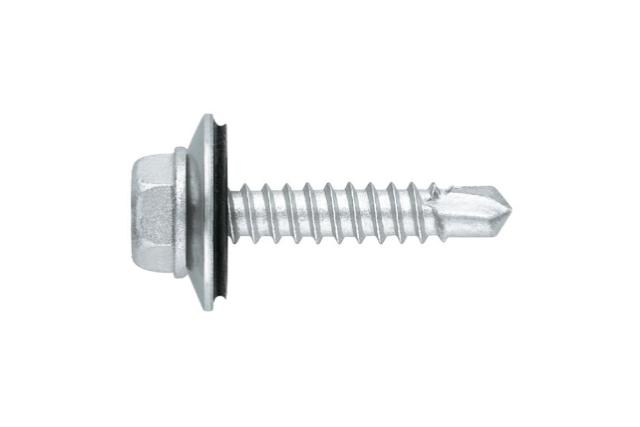
Technical Specification
- Characteristics self-drilling screw-Metel is coded for steel (up to 6 m)
- Material Head of + Part with the Barga: SS304
The hot-dipped galvanized SAE J403 1022 - Protecting the Corsusia : Silver Ruspert Coating
- Head by Box M8
- Installation tool High-speed screwdriver (1000–1800 rpm)
- The option Filed to: EPDM ARVUL
Instruction videos self-drilling screw BIE
installation guide self-drilling screw stainless
A variety of codified screws from Adit Ltd
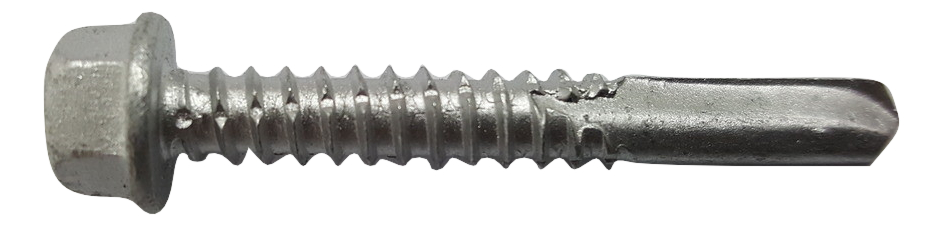
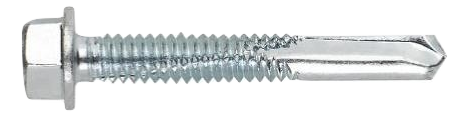

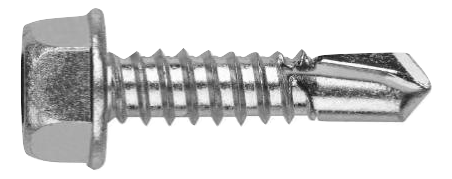
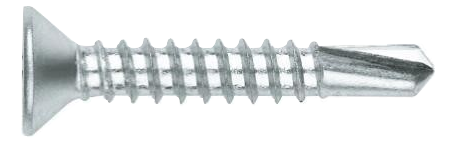
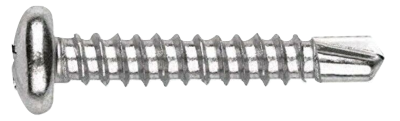
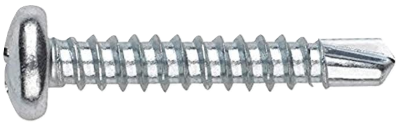
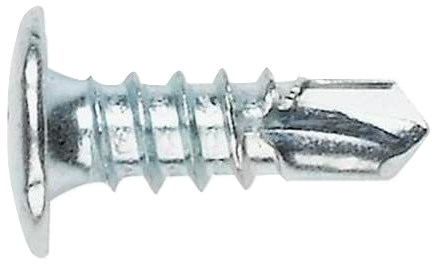


BIE / BIE A4 Bi-Metal Self-Drilling Screw
Bi-metal stainless screw – a hardened carbon-steel drill point on a stainless body drives straight into steel or aluminium up to 6.5 mm, with full corrosion resistance.
SS304 (BIE) / SS316 (BIE A4)
Ø ST 4.8–6.3
Drills steel & aluminium
Atlantis C3-H coated
Files to Download
Full technical data – the load tables for steel and aluminium profiles, drilling speeds, dimensions and catalogue numbers for both BIE and BIE A4 – is given in the technical datasheet above.
What is a Bi-Metal Self-Drilling Screw?
A bi-metal screw joins two metals in one fastener: a stainless-steel body for corrosion resistance, and a hardened carbon-steel drill point welded to it so the screw can drill straight into steel – something plain stainless is too soft to do reliably. The ADIT BIE drills and fastens in a single pass, then resists corrosion for the long term, making it the right choice for steel fixings in coastal, humid and aggressive environments.
The advantage: the drilling power of a carbon-steel self-drilling screw with the corrosion resistance of stainless – one fastener that both cuts into steel and survives outdoors by the sea.
BIE is offered in two stainless grades: BIE (SS304-C1035) for coastal and humid conditions, and BIE A4 (SS316-C1035) for marine and aggressive environments. Both carry an Atlantis C3-H coating, have a hexagonal washer head, and drive into steel and aluminium profiles up to 6.5 mm thick. They are supplied in three diameters – ST 4.8, 5.5 and 6.3 – in lengths from 25 to 80 mm.
Applications
Coastal & marine steelwork
Steel fixings by the sea, where a plain zinc screw would rust – BIE A4 (SS316) for the most aggressive, salt-laden sites.
Façades & cladding
Exterior cladding, rainscreens and architectural metalwork that must stay corrosion-free.
Roofing & wall sheeting
Profiled sheet and panels fixed to steel purlins in humid or exposed locations.
Stainless-to-steel connections
Joining stainless or steel elements where the fastener itself must resist corrosion.
Insulated & sandwich panels
Panel fixings in humid conditions; combine with an EPDM washer for a weather-tight seal.
Pools, food & wet areas
Indoor environments with chlorides or constant moisture where stainless is required.
Installation Guide
1 · Mark & position
Mark the entry point with a light tap, and hold the screw perpendicular (90°) to the profile.
2 · Set the speed
Use a high-speed screwdriver – roughly 1000–2500 rpm in steel depending on the diameter (lower for stainless base). Excessive speed can burn the drill point.
3 · Drill through
Let the carbon-steel drill point cut fully through before the thread engages; keep the total thickness within the drill-point length.
4 · Seat & finish
Stop as the screw seats against the profile – do not overtighten. With an EPDM washer, compress until the seal just spreads.
Instruction Video
Frequently Asked Questions
What does “bi-metal” mean?
The screw is made of two metals: a stainless-steel body for corrosion resistance, and a hardened carbon-steel drill point welded to it. The carbon point drills through steel, and the stainless body keeps the whole fastener corrosion-resistant – a combination plain stainless cannot achieve, because stainless is too soft to drill hard steel.
What is the difference between BIE and BIE A4?
Both are bi-metal. BIE uses an SS304 stainless body, suited to coastal and humid environments. BIE A4 uses an SS316 stainless body, which resists chlorides better and is intended for marine and aggressive, salt-laden environments.
How thick a profile can BIE drill?
BIE drives into steel and aluminium profiles up to 6.5 mm thick in a single pass, in the ST 4.8, 5.5 and 6.3 diameters. The datasheet gives the load values for each base material and size.
When should I use BIE instead of ABE?
Use ABE (zinc-plated carbon steel) for standard indoor and dry work. Use BIE when the fixing is exposed to a corrosive, coastal, humid or marine environment and must resist rust for the long term, while still drilling into steel.
What is the difference between Nrk and Nrd?
Nrk is the characteristic failure load – the load at which the connection physically fails in destructive testing. Nrd is the design load the engineer uses: Nrk divided by the safety factors required by the relevant standard. Always design with Nrd. The datasheet lists Nrk, Nrd and recommended (Nrec) values for steel and aluminium.