

How to Choose the Right Anchor — A Guide to the Differences Between Plugs and Anchors
12 בJuly 2026
Crooked anchors: common questions about incorrectly installed anchors
12 בJuly 2026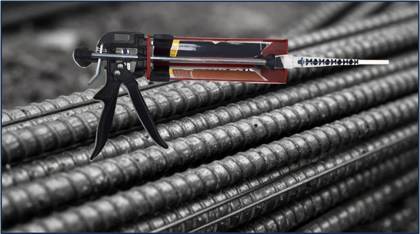
Epoxy Adhesive for Rebar Dowels: The Perfect Solution for Anchoring in Professional Construction
In modern construction, epoxy adhesive for rebar dowels is one of the most advanced and effective solutions on the market today, offering exceptional strength and long-term durability. It is a two-part chemical bonding material — an epoxy resin and a hardener — for anchoring bolts, rods, dowels and studs into concrete, stone, brick and other building materials.
In short
Epoxy adhesive cures by polymerisation to form a very strong three-dimensional structure that bonds powerfully to the base material. Unlike mechanical anchors that rely on friction alone, a pure epoxy such as ADIT CHEMFIX100 creates a true chemical bond with the walls of the hole, spreads loads evenly and resists tension, shear and vibration. It is the required solution for heavy, dynamic and seismic loads, wet and underwater concrete, and chemically aggressive environments — where a polyester such as CT50Pro is limited.
When the two components are mixed, a strong chemical compound is created and a polymerisation process begins, forming a very strong three-dimensional structure that grips the base material with exceptional strength.
The big advantage: unlike mechanical anchors that work by friction only, an epoxy adhesive such as ADIT CHEMFIX100 creates a true chemical bond with the walls of the hole. The material provides an even load distribution and prevents weak points in the connection, ensuring a maximum grip and a far higher resistance to pull-out, shear and vibration forces.
Applications: where is CHEMFIX100 epoxy adhesive used?
Epoxy adhesive suits a wide range of construction applications, from standard projects to the most complex engineering infrastructure:
Infrastructure and ports
Perfect for underwater anchoring in a saltwater environment, under high pressure and constant damp.
Heavy structural construction
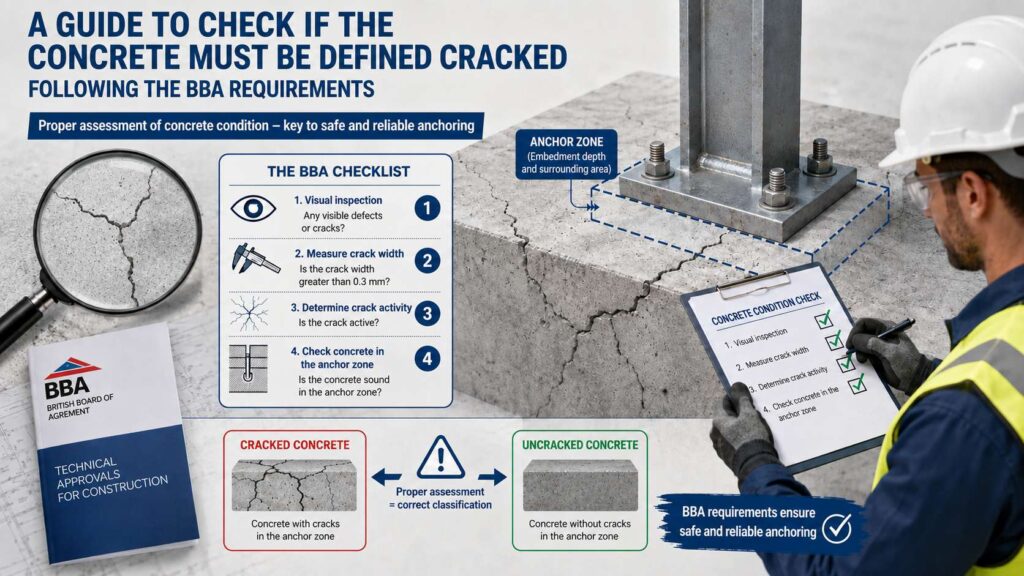
Tall buildings, malls and bridges that require an even load distribution in cracked and uncracked concrete.
Industrial environments
Proven durability in plants and areas exposed to chemicals, oils, fuels and acids.
Rebar dowel anchoring
For continuing concrete pours and connecting structural elements safely, at any angle and even overhead.
Tunnels and car parks
Demanding projects that require long-term stability against dynamic loads and vibrations.
Substrates of weak concrete
Thanks to the distribution of forces over a large surface area, the adhesive is also suitable for use in low-quality concrete.
ADIT CHEMFIX100 — an advanced pure epoxy adhesive
Several chemical anchoring systems exist on the market, but demanding projects require maximum performance. The ADIT CHEMFIX100 adhesive shows especially high pull-out and shear strength. Compared with equivalent chemical anchors on the market (such as equivalent solutions from Hilti), the CHEMFIX100 offers superior power and full compliance with the same strict seismic approvals, with no compromise.
Approvals and standards — your ticket to safe construction
Approvals held: ETAG001 — cracked and uncracked concrete; seismic C1–C2 for earthquake loading; approved for wet concrete; approved for underwater application.
- Maximum strength: provides significantly higher load values; excellent resistance to pull-out, shear and vibration together.
- No creep: does not “creep” under a prolonged load — a critical advantage especially for connections at machine bases and bridges.
- Temperature stability: retains its properties across a wide temperature range, including resistance to high heat in industrial environments.
- Environmental durability: unaffected by contact with water, moisture and chemicals, suitable also for a challenging outdoor environment.
Comparing chemical solutions: pure epoxy versus polyester
To match the right material to the type of load, it is important to know the difference between epoxy-based resins and polyester-based resins.
| Comparison parameter | Pure epoxy (such as CHEMFIX100) | Polyester (such as CT50Pro) |
|---|---|---|
| Material composition | Advanced, pure epoxy resin | Based on polyester resin |
| Purpose and loads | Heavy, dynamic and seismic loads | Light to medium loads |
| Durability in a wet environment | Perfect — approved for wet and underwater concrete | Limited — less resistant to high moisture and heat |
| Creep under load | No creep over time | Tends to creep over time |
| Recommended application environments | Ports, heavy construction, industrial plants | Basic applications, light construction repairs |
Installation stages for a perfect anchor
Thorough preparation of the area and strict adherence to the application instructions are critical to achieving optimal results and preventing failures.
The correct field work process
- Drill the hole to the diameter and depth specified for the rod.
- Clean the hole thoroughly from dust (blow and brush) to ensure a maximum bond between the resin and the concrete.
- Inject the two-part adhesive from the bottom of the hole upward, avoiding air pockets.
- Insert the rod with a slight twisting motion, so the resin is spread around the full circumference of the hole, then leave it undisturbed for the full curing time. Do not load or move the anchor before it has cured fully; the cure time depends on the ambient temperature.
Why choose ADIT Ltd for your epoxy adhesive?
ADIT Ltd provides a range of quality epoxy adhesive solutions, with rich experience since 2006. The company offers a comprehensive, unrivalled package:
- In-depth engineering consulting: qualified engineers who assist in product selection, load calculations and compliance with strict regulations.
- Field training: agents with over ten years of experience who come to site and train the crew in correct application.
- International standards: strict quality control, backed by laboratory tests and approvals attesting to the products’ quality.
- Uncompromising service and available stock: professional support throughout the project and a broad stock available for fast supply anywhere in the country.
Common questions about epoxy adhesive for anchoring
Is epoxy stronger than polyester for chemical anchoring?
Yes. A pure epoxy provides significantly higher load values, does not creep under prolonged load, and is the required choice for heavy, dynamic, seismic, wet and underwater applications. Polyester suits light-to-medium loads and basic applications; it is cheaper, but it is less resistant to moisture and heat and is not recommended for industrial environments. CHEMFIX100 gives full epoxy performance together with international approvals.
How long does the epoxy take to cure before it can be loaded?
Cure time depends heavily on the ambient temperature. At 20 °C loading can begin after about 12 hours, or 24 hours where the hole was formed by diamond drilling. At higher temperatures (30 °C and above) the reaction is faster; at lower temperatures it takes longer, and an adapted formulation should be used.
Can epoxy adhesive be installed in wet or underwater concrete?
Yes. A pure epoxy such as CHEMFIX100 is approved for wet and underwater concrete, whereas polyester is limited in high moisture.
What is the correct hole size for use with epoxy adhesive?
Hole size is set by the diameter of the element being installed. As a rule the hole is 2 mm larger than the thread size for threaded rod up to 20 mm diameter, and 4 mm larger for reinforcing bar or rebar dowels. Always follow the manufacturer’s detailed table — drilling to the wrong size severely reduces the strength of the connection.
Is epoxy adhesive suitable for use in cracked concrete?
Yes. CHEMFIX100 is available in a version holding ETAs issued explicitly for cracked concrete. Bond performance is tested and rated separately according to the requirements of the project.
What is the most critical installation step?
Cleaning the hole from dust before injection. A dusty hole significantly reduces the bond strength and can cause failure even at relatively low loads.
Sources
- ADIT CHEMFIX100 (pure epoxy) and CT50Pro (polyester) technical data and approvals.
- General engineering guidance on bonded anchors (epoxy vs polyester, creep, wet-environment durability).