



Cracked concrete and anchoring: frequently asked questions
12 בJuly 2026
How to make a steel connection to steel?
12 בJuly 2026Cracked concrete and anchoring: frequently asked questions
12 בJuly 2026How to make a steel connection to steel?
12 בJuly 2026A rock anchor to fix DYWIDAG bars? Think again
A rock anchor to fix DYWIDAG bars? Think again
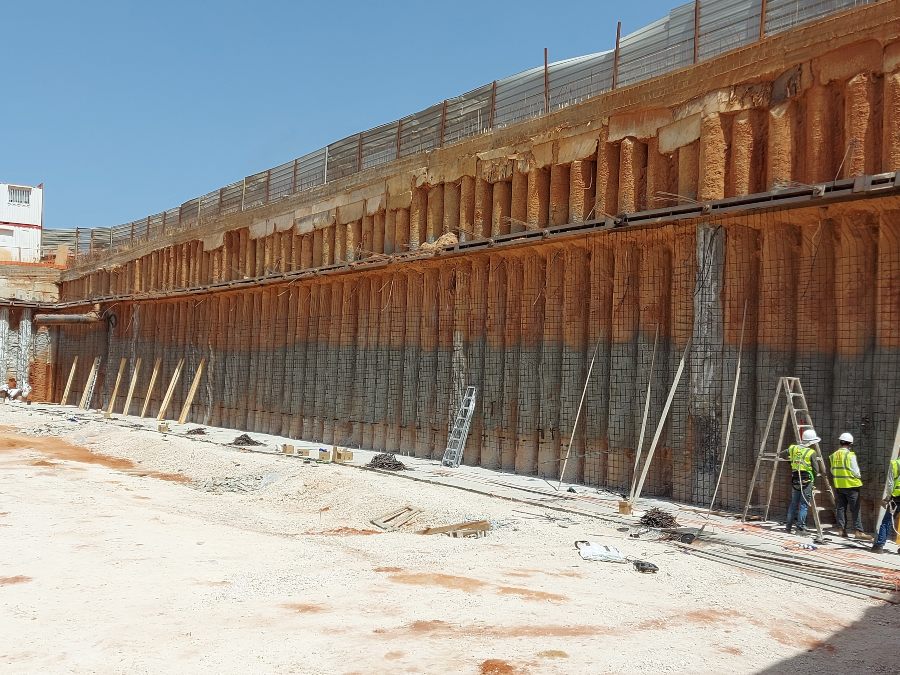
It is common practice to use a rock anchor to fix a DYWIDAG bar to bored piles where single-sided formwork is used. But is that really the cheapest, the most effective and the safest solution?
To begin with, there is no technical specification defining the load capacity of a rock anchor, nor the effect of embedment depth, concrete grade and so on, as is standard practice everywhere else in the anchoring field. It is hard to understand how a fixing component can be used at all without knowing what it will actually hold. And although some suppliers state on their website that a pull-out test should be carried out on the rock anchor, in practice the test is almost never done.
The idea for this article came out of a pull-out test we carried out for one of the largest contractors in Israel, on a rock anchor at a site in Rishon LeZion. The anchor held 5.4 tonnes.
We also carried out a pull-out test on the ADIT MES anchor, which held a very different load: 14 tonnes.
![[your-subject]](https://www.adit.org.il/wp-content/uploads/2026/07/ADIT_MES2.png#10442)
![[your-subject]](https://www.adit.org.il/wp-content/uploads/2026/05/Adit_Metal_Expanding_Shell_2-removebg-preview.png#9454)
Standard rock anchor
pull-out test with ADIT MES
Pull-out test on a standard rock anchor
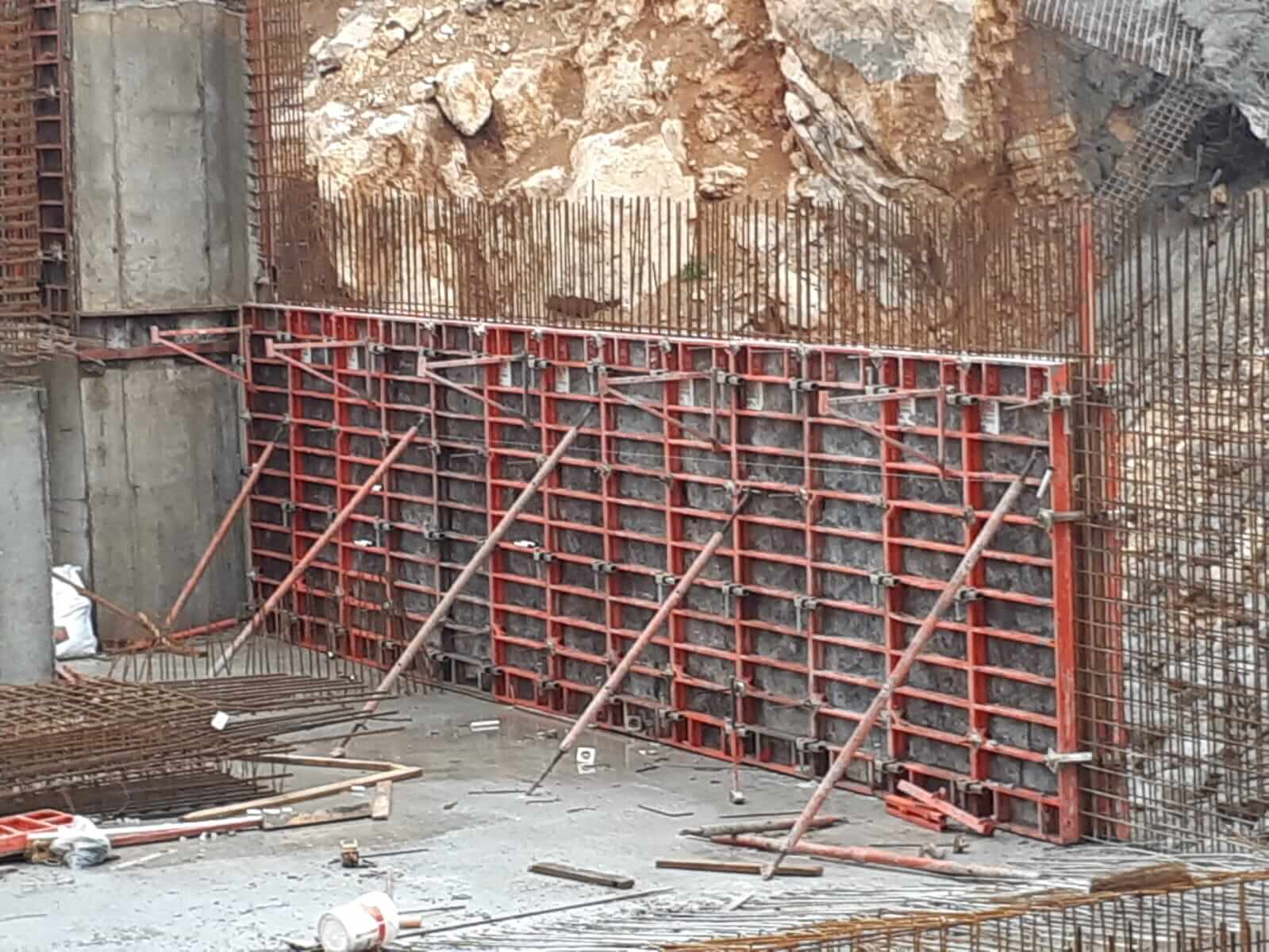
A client using a rock anchor for a 16 mm DYWIDAG bar, with a permissible pull-out load of 9 tonnes (and a rupture capacity of around 14 tonnes), would expect an anchoring capacity considerably greater than the 5.4 tonnes we measured in our test. It is worth noting that the way the contractor tightened the anchor — which, according to him, followed the seller's instructions — caused significant movement of the anchor during the pull-out, most likely because the anchor had not expanded fully on installation.
So the first point is this: select a rock anchor on the basis of its verified load capacity — do not assume that every rock anchor is the same.
But is there an alternative?
The apparent advantage of the rock anchor is that its visible cost is low (around 8 NIS per anchor, excluding VAT), and the DYWIDAG bar can be recovered after the pour. On the face of it, the cost per anchoring point is 8 NIS. In practice, though, installation requires drilling to a depth of 400 mm (or more) with a 32 mm drill bit. Such a bit costs around 500 NIS and will typically drill no more than 20 holes. Add that it takes a worker at least 7 minutes to drill each hole — and if he hits reinforcement while drilling, a fresh hole has to be drilled — and add the time to install the anchor itself, and you arrive at roughly 4 anchors per hour. At a daily wage of 400 NIS, that is a further 12.5 NIS per point. So even without accounting for the need for a breaker, the total comes to 45.5 NIS per anchoring point, excluding VAT.
The chemical solution: stronger, more efficient and cheaper
The realistic alternative is chemical anchoring. It requires a 20 mm diameter hole, only 200 mm deep. With relatively cheap chemical adhesives you get a capacity of around 10 tonnes; with stronger adhesives you reach around 18 tonnes. In terms of load capacity, chemical anchoring is far stronger, better and safer than the rock anchor. So what about cost?
The adhesive itself costs between 2.5 NIS for a standard adhesive such as Adit CT50Pro and 5 NIS for a stronger adhesive such as Adit Chemfix200, depending on the quantity required. A 20 mm diameter, 200 mm long drill bit costs around 180 NIS and is good for roughly 40 holes — at a smaller diameter and shallower depth, the bit suffers far less wear. Drilling takes 3–4 minutes, and adding the injection of the adhesive and the insertion of the bar brings it to about 5 minutes, so at the same daily wage the labour cost is around 4 NIS. To that you must add roughly 350 mm of DYWIDAG bar lost inside the pour, at a cost of about 4 NIS. All in, the true cost is between 15 and 18 NIS per anchoring point — around a third of the cost of the rock anchor, installation included.
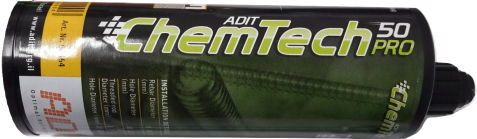
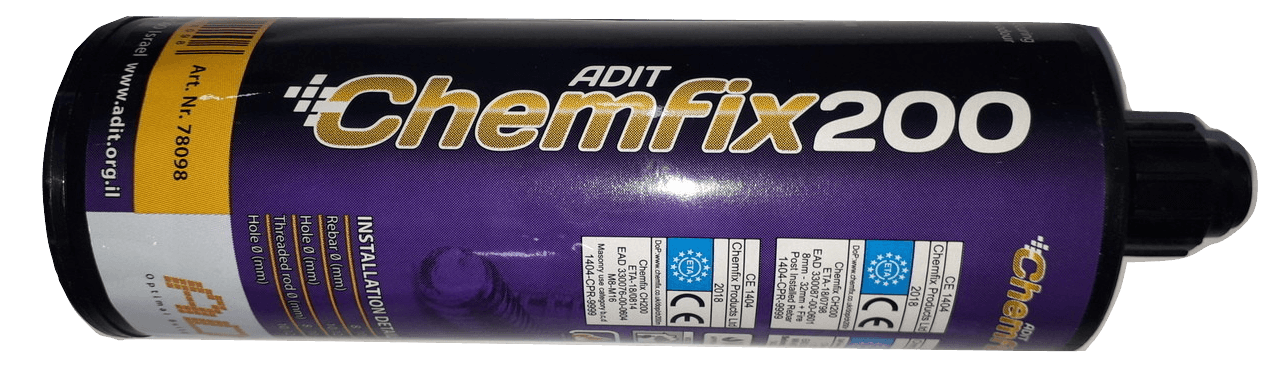
installation guide to Chemical anchoring in hollow blocks
installation guide to Chemical anchoring
Cost comparison per anchoring point
| Cost item | Rock anchor (NIS per point) | Chemical anchoring (NIS per point) | |
|---|---|---|---|
| Standard | Strong | ||
| Material (anchor / adhesive) | 8 | 2.5 | 5 |
| Drill bit cost per hole | 25 | 4.5 | 4.5 |
| Labour (drilling + installation) | 12.5 | 4.5 | 4.5 |
| DYWIDAG bar lost in the pour | — | 4 | 4 |
| Total per anchoring point | 45.5 NIS | 15.5 NIS | 18 NIS |
strong chemical anchor
standard chemical anchor
rock anchor, measured on site
And all of this is before accounting for the cost of the pull-out test that the rock anchor supplier's own guidance requires (thousands of shekels) — as against the fairly precise, known load capacity of a chemical anchor, even without a pull-out test.
In conclusion: it is worth checking whether chemical anchoring is not the better option compared with the mechanical solution of a rock anchor for fixing DYWIDAG bars. And if you do go with a rock anchor, make sure you know exactly which anchor you are buying, and that it is approved.