



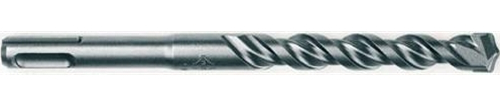
SDS-Plus MS2 Concrete Drill Bit
Milwaukee MS2 dual-head concrete drill bit with a two-cutter carbide tip and an SDS-Plus shank — built for fast, precise hammer drilling in concrete and masonry.
The Adit drilling range
Match the drill bit to your shank system, base material and hole diameter.
Technical specification
| Property | SDS-Plus MS2 — Milwaukee dual-head concrete drill bit |
|---|---|
| Bit type | Two-cutter carbide-tipped drill bit |
| Head design | Dual-head carbide tip |
| Shank | SDS-Plus |
| Drilling mode | Rotary hammer |
| Base materials | Concrete and masonry |
| Manufacturer | Milwaukee |
| Series | MS2 |
Instructional & field videos
SDS-Plus concrete drill bits: the complete guide
Everything you need to know about the SDS-Plus MS2 concrete drill bit — from the shank system and the carbide head, through correct drilling technique, to hole preparation for chemical anchoring. This guide was written by the experts at Adit Ltd.
What is an SDS-Plus drill bit and how does it work?
An SDS-Plus drill bit uses the SDS-Plus shank system, in which the shank slots into the rotary hammer and is free to slide back and forth a short distance. This lets the tool deliver a hammering impact directly along the axis of the bit while it rotates, so the carbide tip chips away the concrete instead of relying on pressure alone. The MS2 carries a two-cutter carbide head that keeps the hole round and helps the bit track straight.
The drilling principle:
The rotary hammer combines rotation with rapid axial impact. The hardened carbide tip fractures the concrete at the bottom of the hole, and the flutes of the bit carry the resulting dust up and out. Because the impact energy passes straight through the SDS-Plus shank, drilling is faster and takes far less push force than a plain masonry bit in a standard drill.
Drilling stages with an SDS-Plus bit
- Select the bit — choose the diameter and length to suit the hole you need, and confirm the tool accepts an SDS-Plus shank.
- Set the tool to hammer-drill mode — engage rotation with impact and let the tool do the work; excessive push force is not needed.
- Start the hole — position the tip, drill slowly to establish the hole, then continue at full speed.
- Drill to depth — keep the bit steady and let the flutes clear the dust as you advance.
- Clean the hole — brush and blow out the dust, especially where the hole will be used for a chemical or mechanical anchor.
Advantages of the SDS-Plus MS2 drill bit
- Fast material removal: the SDS-Plus impact system drills concrete quickly with little operator effort.
- Two-cutter carbide head: keeps the hole round and helps the bit stay on line.
- Quick tool changes: the SDS-Plus shank clicks in and out without a chuck key.
- Durable carbide tip: built to hold its edge through repeated drilling in hard concrete.
- Clean holes for anchoring: consistent hole geometry supports reliable installation of mechanical and chemical anchors.
Frequently asked questions
What is the difference between SDS-Plus and SDS-Max?
What does a two-cutter head mean?
Which base materials is the MS2 suitable for?
Do I need to clean the hole after drilling?
Can I use the MS2 in a standard drill?
Drilling for anchors on your project? Tell us the hole diameter, depth and base material — our team will help you match the right drill bit and anchoring system.