


Injection Gun
Dispensing gun for ADIT chemical anchor cartridges — manual, electric and pneumatic. The gun drives the resin and hardener through the static mixing nozzle in the correct ratio, ready to inject into the drilled hole.
Technical specification
| Property | Injection gun — dispensing gun for chemical anchors |
|---|---|
| Accessory type | Dispensing gun for chemical anchor cartridges |
| Function | Drives resin and hardener through the static mixing nozzle at the correct mixing ratio |
| Drive options | Manual (hand lever), electric (battery) and pneumatic (compressed air) |
| Compatible adhesives | Chemfix100, Chemfix200 and CT50Pro |
| Cartridge size | Includes a model sized for the six-hundred millilitre cartridge |
| Manual gun | Hand gun for occasional and light-volume fixings |
| Electric gun | Battery gun for CT50Pro and Chemfix200 — steady, low-effort injection for high-volume work |
| Pneumatic gun | Air-driven gun for continuous, high-throughput site work |
Models
Choose the gun to match the cartridge and the volume of work.
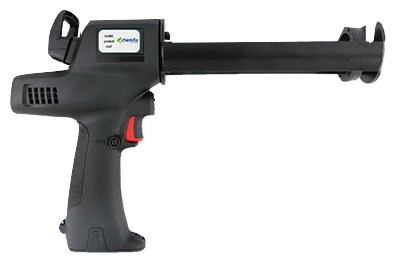 Electric gun — CT50Pro & Chemfix200
  Dispensing gun — Chemfix100 Manual gun — CT50Pro & Chemfix200
 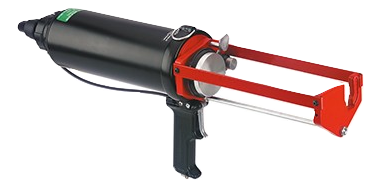 Pneumatic gun — CT50Pro & Chemfix200
 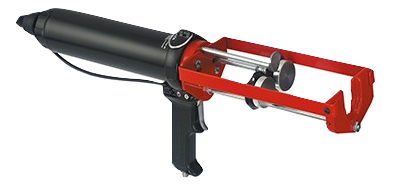 Pneumatic gun — Chemfix100
Dispensing guns for chemical anchors: the complete guide
Everything you need to know about the dispensing gun (injection gun) for chemical anchors — how it works, the difference between manual, electric and pneumatic drives, and how to match the gun to the cartridge. This guide was written by the experts at Adit Ltd., the largest chemical-anchor company in Israel.
What is a dispensing gun and how does it work?
A dispensing gun is the applicator that pushes a chemical anchor cartridge. As the plunger advances, it drives the two components — the resin and the hardener — out of the cartridge and through a static mixing nozzle. Inside the nozzle the two components are blended in the correct ratio, so the material that reaches the tip is already fully mixed and ready to inject into the drilled hole.
Because the gun controls the flow and the mixing, choosing the right gun is what turns a cartridge of adhesive into a clean, repeatable injection. The wrong gun — one that does not fit the cartridge body or cannot deliver enough force — leads to poor mixing, wasted material and weak fixings.
Manual, electric or pneumatic — which to choose
- Manual gun: a hand-lever gun for occasional and light-volume fixings. Simple, reliable and needs no power source — ideal for small jobs and repairs.
- Electric (battery) gun: a battery-powered gun for CT50Pro and Chemfix200 cartridges. It delivers steady, low-effort injection and is the right choice for high-volume work where a manual lever would tire the operator.
- Pneumatic (air) gun: a compressed-air gun for continuous, high-throughput site work — the fastest way to empty many cartridges in sequence.
Matching the gun to the cartridge
Chemical anchor cartridges differ in body shape and size, so the gun must match the cartridge you are using:
- Chemfix100 uses its own dedicated dispensing gun, available in a manual version and a pneumatic version.
- Chemfix200 and CT50Pro share a common gun family — manual, electric and pneumatic.
Always fit a fresh static mixing nozzle to each new cartridge, and start every injection from the bottom of the hole upward so the adhesive fills the hole without trapping air.
Frequently asked questions
Which gun do I need for Chemfix100?
Which gun do I need for Chemfix200 and CT50Pro?
What is the difference between a manual, electric and pneumatic gun?
Do I need a separate gun for each cartridge type?
What is the static mixing nozzle and do I reuse it?
Not sure which gun matches my job?
Not sure which gun you need? Tell us the anchor and the job — our engineers will point you to the right dispensing gun and cartridge.