


How to interpret seismic approval for anchors
12 בJuly 2026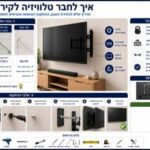
How to choose the right plug for wall-mounting a TV
12 בJuly 2026How to interpret seismic approval for anchors
12 בJuly 2026How to choose the right plug for wall-mounting a TV
12 בJuly 2026Which Blocks Are Best for Anchoring Stone Cladding?
On many sites the block is chosen for thermal insulation, acoustics or cost — with no thought for the stone cladding that has to be anchored into it later. What you save at the block stage, you often pay back at the cladding stage.
At the cladding design stage it frequently turns out that the blocks chosen are too soft to anchor into, or that expensive adjustments are needed — more fixings than standard, for example. Below is a survey of the block types common in Israel, their technical characteristics, and what each one means for anchoring stone cladding.
The common blocks at a glance
| Block type | Compressive strength | Holds (10 mm plug) | For stone cladding |
|---|---|---|---|
| Ytong / aerated (AAC), 4 MPa | approx. 4 MPa | over 600 kg at 80 mm | Good – use the 4 MPa grade |
| Ytong / aerated (AAC), 2-3 MPa | 2-3 MPa | up to 150 kg | Not recommended |
| Hollow concrete block | 5-10 MPa | 160-300 kg at 60-80 mm | Good – into the solid web |
| Pumice block | Varies widely | 100-340 kg | Only after on-site testing |
| Gypsum block | — | 160-250 kg | Internal / dry areas only |
Ytong / aerated block (AAC)
Ytong is autoclaved aerated concrete (AAC), made from steam-cured aerated concrete; in Israel it is also sold as Ytong and Siporex. It comes in various densities — 400, 500 and 600 kg per cubic metre — corresponding to compressive strengths of roughly 2, 3 and 4 MPa respectively.
For thermal insulation, Ytong is outstanding: its lambda value (thermal conductivity) is around 0.09-0.14 W/(m·K) depending on density, several times lower than ordinary concrete block. The lighter blocks (400 kg/m3) insulate better — but they are weaker to anchor into.
Ytong 4 MPa — the right choice for stone cladding
Blocks with a compressive strength of 4 MPa are suitable for anchoring, and are also sold as “blocks for anchoring”. A quality plug of 10 mm diameter, installed to a depth of 80 mm, will hold over 600 kg. Ytong also installs quickly and absorbs relatively little moisture.
In the lower-density grades (2-3 MPa) it is often hard to reach even 150 kg in tension. Avoid those grades for walls that are to be stone clad.
Other advantages: it is easy to work — it saws and routs cleanly — it is light to handle, it offers high fire resistance (up to 4 hours), and it absorbs less moisture than the other lightweight blocks. Its main drawback: at low density, anchoring performance is poor, and anchors made specifically for Ytong are required rather than ordinary mechanical anchors.
Hollow concrete block
The most common block in Israel. Made from compacted concrete, usually with internal voids, in thicknesses of 150, 200 or 250 mm. Typical compressive strength is 5-10 MPa, with a density around 1,100-1,400 kg/m3 for a hollow block.
For thermal insulation it is significantly inferior to Ytong — lambda around 0.7-1.0 W/(m·K) — so an external insulation layer is sometimes needed, and that has to be taken into account when designing the cladding fixing system. For anchoring, a quality 10 mm plug of suitable length, installed 60-80 mm into the solid web of the block, will hold 160-300 kg.
Watch out for the cavity
A hollow concrete block has two solid skins with air between them. Drill at the wrong angle or in the wrong spot and the plug lands in the cavity rather than the skin, where it grips nothing at all. Always confirm the depth and the grip after installation.
Pumice block
Pumice block (scoria stone) is made from lightweight volcanic aggregates. It comes in different grades — light pumice (density 700-900 kg/m3) and heavy pumice (1,000-1,200 kg/m3). The central problem is that the quality of pumice varies enormously from supplier to supplier, and even from batch to batch. In site tests with the same quality of plug, one pumice block held no more than 100 kg, while a pumice block that looked identical came back with 340 kg in tension — a difference driven entirely by the density and quality of the pumice.
Pumice — test before you commit
Before designing a stone-cladding anchorage onto pumice block, two things are mandatory:
- Get the density and the compressive strength of that particular block from the supplier.
- Run a representative on-site pull-out test of the anchors in the blocks themselves, before the final installation goes ahead.
Gypsum block
A gypsum block is made of solid gypsum, usually 70, 100 or 120 mm thick, and is used mainly for internal walls and partitions. A moisture-resistant version also exists — normally identified by its green colour — for bathrooms and kitchens.
Fixing into gypsum block is not a problem. A quality plug of 10 mm diameter, installed 60-80 mm into the block, will hold 160-250 kg in tension — good results for anchoring stone cladding on internal walls. One important limitation: ordinary gypsum block is not suitable for prolonged exposure to moisture. For external use, or in damp conditions, use only the moisture-resistant (hydrophobic) version.
Termolite and other special blocks
The Israeli market also offers Termolite blocks — lightweight concrete blocks with thermal aggregates that improve insulation. Their anchoring performance is similar to hollow concrete block, but you should check the specific compressive strength from each supplier. There are also insulated concrete (sandwich) blocks with a layer of polystyrene embedded inside; here the drilling must pass through the insulation layer and grip the concrete beyond it.
The plug material matters just as much
Once you have chosen the right block, make sure the plug used for the stone cladding is made from polyamide (PA6) and not from ordinary polypropylene (PP), which breaks down over the years under sun, heat and cold, and that it carries a European approval. A European approval for plugs guarantees the quality and a service life of more than 20 years; plugs without one can disintegrate within a few years outdoors. The block and the plug work as a pair: a good plug in a weak block, or a weak plug in a good block, will both disappoint.
Before you build — the summary
Practical recommendations
- Decide the block type at the design stage, before construction begins.
- For Ytong, choose the 4 MPa grade only for walls that are to be clad.
- For pumice, get the density figures from the supplier and carry out a pull-out test on site before installation.
- For hollow concrete block, make sure the plug goes into the solid web, not the void.
- For every type of block, use only polyamide (PA6) plugs with a European approval.
- If you are in any doubt about anchoring performance in a particular block, carry out a preliminary pull-out test.