




How anchors behave under blast loading
12 בJuly 2026
Underwater (chemical) anchoring: how to design it and how to install it
12 בJuly 2026How anchors behave under blast loading
12 בJuly 2026Underwater (chemical) anchoring: how to design it and how to install it
12 בJuly 2026Why use a bad plug when you can use a good one?
Which plug suits what? A professional guide to engineered anchoring and common failures
In construction and maintenance — whether the application is a light domestic fixing or an industrial structural system — choosing the wrong anchoring element is one of the most common causes of structural failure, damage to property, and even danger to life. There are hundreds of types of anchor and plug on the market, and matching them precisely to the base material, the type of load and the relevant standards is a basic condition of professional work.
1. The cheap plastic trap, versus nylon anchors (polyamide PA6)
In most builders' merchants in Israel, hundreds of thousands of plugs are sold that are made from cheap, simple plastic — typically from low-grade recycled polyethylene. These plugs are suitable only for light, simple work in the home: hanging a small picture, or a very light fixing.
Even so, most of us have already seen these plastic plugs fail and pull out, even in relatively light applications such as fixing a shower tap. When it comes to hanging shelves, cabinets or anything heavier, the simple plastic plug does not provide a safe answer.
Professional suppliers in engineered anchoring avoid selling simple plastic plugs, for two main reasons. First, ordinary plastic tends to dry out, break down and lose its properties over the years. Second, its load-bearing capacity is significantly lower. The correct professional solution — at a similar price, but performing at an entirely different level — is the nylon anchor.
What are the technical differences between a plastic plug and a professional nylon anchor?
- Material quality (polyamide PA6): quality nylon anchors are made from polyamide PA6. This material retains its mechanical properties, does not dry out, and holds its position in the base material for more than 50 years without any significant loss of performance.
- Flexibility and mechanical durability: the nylon anchor is far more flexible and far stronger than the brittle plastic plug.
- Load-bearing capacity: nylon anchors can carry pull-out loads two to four times higher than ordinary plastic plugs.
- Value for money: the price difference between the professional plugs and the plastic ones is minimal, and negligible set against the peace of mind and the damage avoided.
How do you make sure you are getting a professional, standards-compliant nylon anchor?
- Buy from authorised suppliers: always go to companies that specialise specifically in anchoring and engineering (Adit Ltd, Hilti, Fischer and the like).
- Insist on a European Technical Assessment (ETA): ask only for anchors carrying a European technical approval. Every anchor with this approval has been certified in the laboratory for a service life of at least 50 years — which automatically rules out the simple plastic plug.
- Confirm the material: ask to see that the anchor is made from polyamide PA6.
- Test the elasticity on site: check that the anchor bends easily without breaking. A quality PA6 polyamide nylon will never crack or snap when bent by hand.
In summary: the minimum requirements for a safe specification
Before you choose an anchoring element for your next project, make sure you can answer three key questions:
- What exactly is the base material? (Cracked concrete, hollow block, Ytong block, or a prestressed hollow-core slab.)
- Does the product hold a relevant ETA approval? (Do not settle for general claims from the manufacturer.)
- What material is it made of? (Prefer polyamide PA6 nylon anchors, or pure epoxy systems for structural applications.)
Taking advice from anchoring engineers early, and using products from licensed, professional suppliers, is the key to anchoring that is safe, compliant and durable for the long term.

![[your-subject]](https://www.adit.org.il/wp-content/uploads/2026/07/דיבל-e1783075814399-removebg-preview.png#10443)
Simple plastic plug
![[your-subject]](https://www.adit.org.il/wp-content/uploads/2026/06/TN4S-2026-1.jpg#9896)
TN4S
The world's strongest and most advanced drywall anchor for heavy loads

GL
Universal nylon plug for general use across a range of base materials
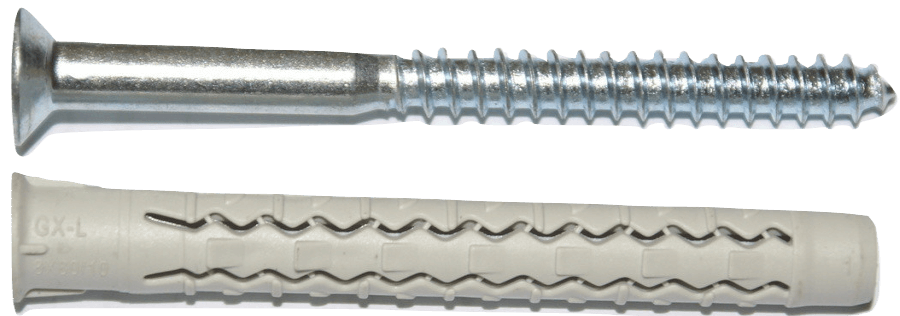
GX-L
Nylon plug with European Technical Assessment (ETA) for concrete and all base materials